
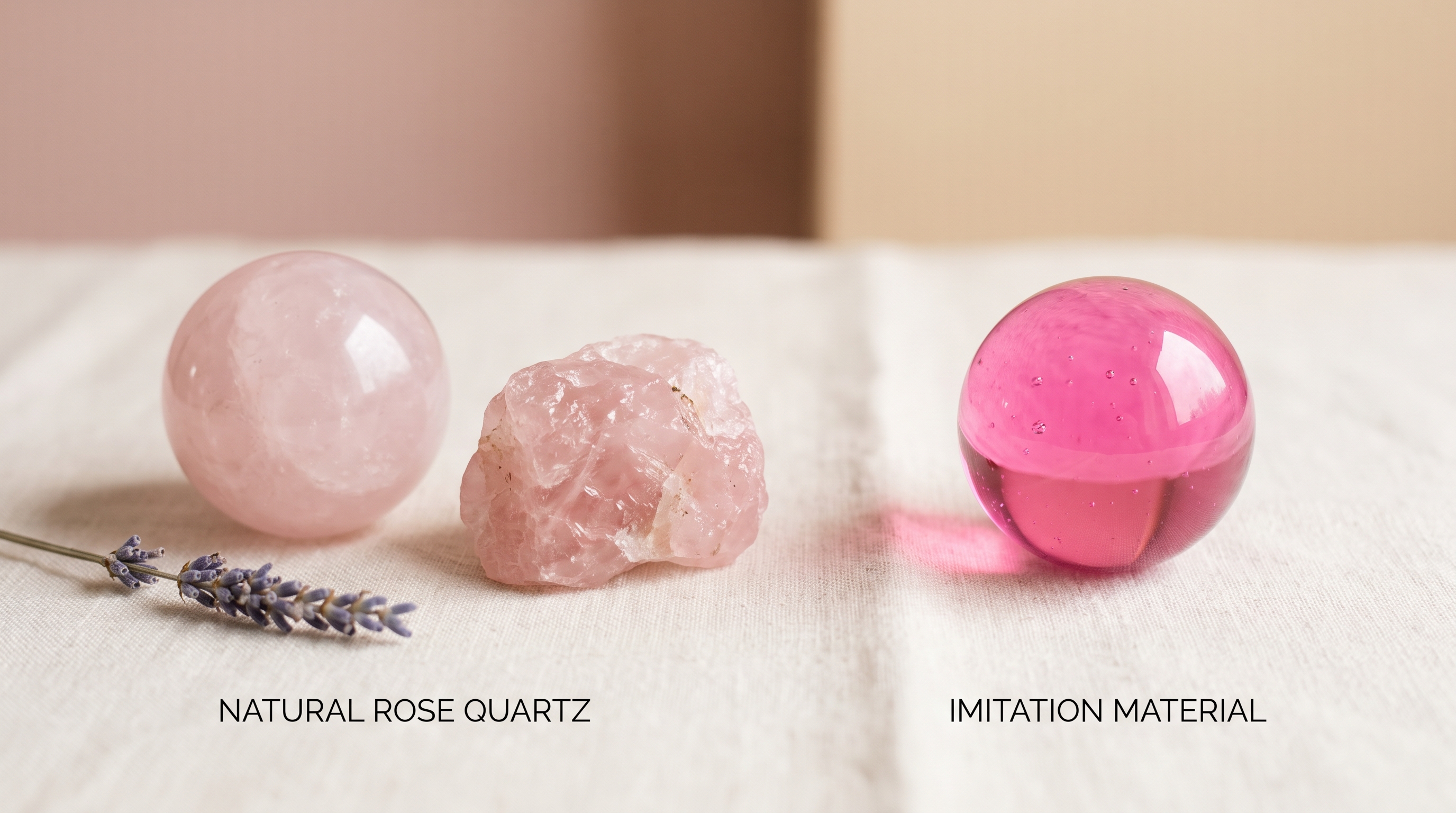
Rose quartz's soft, blush pink colour is exactly why it gets faked so often. A gentle, universally loved shade like this is easy to imitate with dyed white quartz, dyed glass, or plain pink resin, especially once a piece is polished into a sphere or a heart and any obvious clues are smoothed away. If you have ever looked at a suspiciously perfect, glassy pink sphere and wondered whether the colour is a little too vivid to be natural, this guide is for you.
The reassuring part is that rose quartz is genuinely one of the more straightforward crystals to check at home. Below is what actually gives real rose quartz its colour, the tell-tale signs of a dyed or glass imitation, two simple tests you can run on a piece you already own, and one surprising fact about rose quartz points worth knowing before you buy.
What Actually Gives Rose Quartz Its Pink Colour
Rose quartz is a variety of ordinary quartz, silicon dioxide, the same mineral family as amethyst, citrine and clear quartz. Its pink colour has traditionally been credited to trace amounts of titanium, iron or manganese locked into the crystal structure, though more recent mineralogical research points to microscopic, fibrous pink mineral inclusions running through the stone as the real cause. Either way, the colour is genuinely part of the mineral rather than sitting on its surface.
This is also why genuine rose quartz almost never looks gem clear. It typically forms as large, cloudy, milky masses rather than the well defined, glassy crystals amethyst or citrine can grow into, which is why a natural piece usually shows a soft, slightly hazy translucence, gentle internal variation from pale blush to a deeper rose, and the occasional fine natural fracture, rather than flawless, uniform, water clear colour.
Tell-Tale Signs of Dyed or Glass Rose Quartz
- Colour that pools in cracks and fractures. Dye is usually drawn in through the stone's existing fissures, so it often looks darker and more concentrated right along any natural cracks, rather than sitting evenly through the piece the way genuine colour does.
- An unnaturally vivid, hot pink shade. Genuine rose quartz is a soft, muted, milky pink. A piece that looks bright, saturated, or almost fluorescent pink is far more likely to be dyed quartz or coloured glass than natural stone.
- Glassy, gem clear transparency. True transparent pink quartz exists but is genuinely rare and expensive. If a large, cheap piece looks perfectly clear rather than softly translucent or milky, it is more likely glass.
- Visible bubbles or a swirled, syrupy internal pattern. Tiny trapped air bubbles or a swirling internal texture are classic signs of cast glass, something a genuine crystalline mineral will never show.
- Colour that transfers when wiped. This is the giveaway most people never think to try. Wipe an inconspicuous spot with a cotton bud dipped in a little rubbing alcohol or nail polish remover. Genuine mineral colour will never come off. If any pink transfers onto the cotton bud, you are holding a dyed piece.
Two Physical Tests You Can Run at Home
Quartz is a genuinely hard, tough mineral, and that hardness is exactly what makes it possible to tell a real piece from glass or a much softer imitation without any special equipment.
The Hardness Test (Mohs 7)
Genuine rose quartz sits at 7 on the Mohs hardness scale, harder than a steel knife blade (roughly 5.5) and harder than ordinary glass (roughly 5.5 as well). That gives you a simple pair of checks on an inconspicuous edge:
- Genuine rose quartz should be able to leave a light scratch on a piece of glass or a steel blade.
- A steel blade or glass should not be able to scratch genuine rose quartz.
If a steel blade or a shard of glass scratches your piece easily, you are very likely holding coloured glass, dyed resin, or a much softer imitation rather than genuine quartz. This one test rules out the great majority of fakes on its own.
The Cotton Bud Colour Test
Dab a cotton bud with a small amount of rubbing alcohol, acetone or nail polish remover, and gently wipe an inconspicuous spot on the stone. Genuine rose quartz's colour is part of the mineral itself and will never lift or transfer, no matter how hard you rub. If you see any pink colour come away on the cotton bud, the piece has been surface dyed rather than naturally coloured.
A Bonus Fact: Why Genuine Rose Quartz Points Are So Rare
Here is something most sellers never explain. Unlike amethyst or clear quartz, rose quartz almost never grows as a naturally pointed, well formed crystal. It typically forms as large, shapeless masses deep within pegmatites, and naturally terminated rose quartz crystals are so uncommon that well documented specimens have only ever been found in a small handful of locations worldwide. This means the pointed "Rose Quartz Point" pieces sold almost everywhere, including in our own range, are genuine rose quartz that has been cut and polished into that shape from larger natural material, not a naturally occurring point. That is completely normal and not a sign of anything artificial about the stone itself, simply a fact worth knowing about how the shape came to be.
Shop Genuine Rose Quartz
What "Genuine, Hand Selected" Actually Means Here
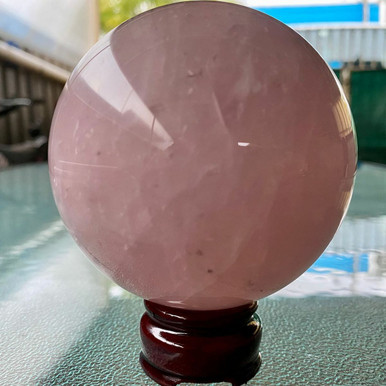
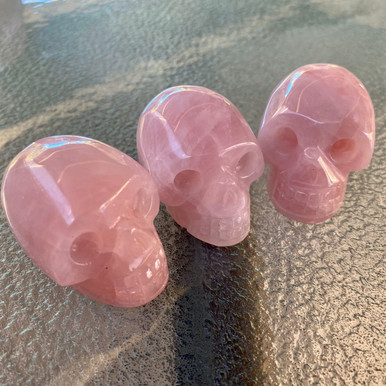
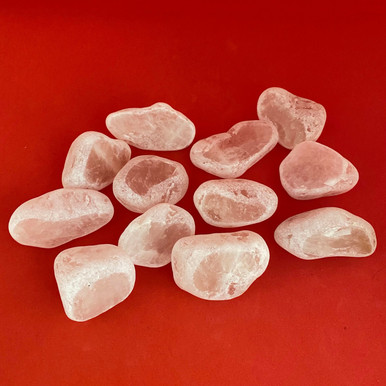
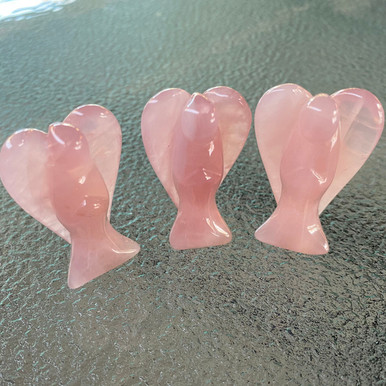
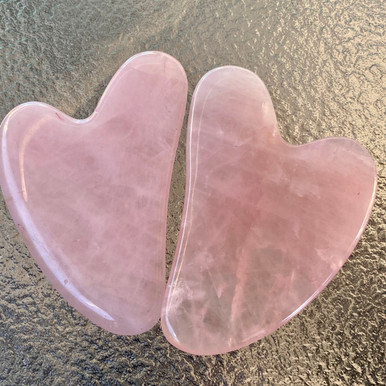
Our Rose Quartz collection page describes every piece as a genuine natural stone, hand selected before it is listed, and it is worth explaining what that means in practice. It means each Sphere, Heart, Point, Skull and Seer Stone is chosen individually for its natural colour and character, not bought sight unseen as an anonymous bulk lot. It means nothing in our range is dyed quartz or coloured glass sold under the rose quartz name, and it means the gentle variation you will see between two pieces of the same shape, one leaning paler, another a touch deeper in tone, is genuine natural variation rather than a batch of identically dyed stock.
That soft, milky, slightly uneven character is worth appreciating rather than second guessing. A flawless, uniformly vivid pink is the thing to be cautious of. A gentle, slightly cloudy, naturally varied piece is exactly what real rose quartz looks like.
More Genuine Rose Quartz to Explore
Every piece below is checked the same way before it's ever listed.

Want to see the whole genuine range?
Discover the Full Rose Quartz CollectionIf you already know yours is genuine and want a simple way to use it, our guide Rose Quartz for Self-Love: A Simple Daily Ritual covers a short daily practice and which shape suits which routine. For the fuller story behind this stone, including its history and other traditional healing properties, see our 15 facts about rose quartz.
Frequently Asked Questions
Is rose quartz real, or is most of what's sold fake? Genuine rose quartz is a common, abundant, naturally occurring form of quartz, so most rose quartz on the market is real. The imitations that do exist are usually dyed white quartz, dyed glass, or pink resin sold under the rose quartz name to trade on its popularity, rather than counterfeit rose quartz itself.
How can I tell if my rose quartz is dyed? Look for colour that pools in cracks rather than sitting evenly, an unnaturally vivid hot pink shade rather than a soft milky one, and try wiping an inconspicuous spot with a cotton bud and a little rubbing alcohol. Genuine colour will never transfer onto the cotton bud.
What's the easiest way to check if rose quartz is glass? Try the hardness test. Genuine rose quartz sits at 7 on the Mohs scale and should be able to scratch glass or a steel blade, while neither should be able to scratch it. Visible air bubbles or a swirled internal pattern are also reliable signs of glass, since a genuine crystalline mineral never shows either.
Why is genuine rose quartz cloudy instead of clear? Rose quartz typically forms as large, massive growths rather than well defined, glassy crystals, which is why a natural piece usually shows a soft, slightly hazy translucence rather than flawless, gem clear colour. A perfectly clear, glassy pink piece is actually more likely to be an imitation.
Are rose quartz points naturally shaped that way? Almost never. Naturally terminated rose quartz crystals are genuinely rare, so the pointed pieces sold under this name, including ours, are cut and polished into that shape from larger natural rose quartz. The stone itself is still entirely genuine, it has simply been shaped by hand rather than grown that way.
These are practical, physical checks based on general mineralogical information rather than a laboratory analysis. If you are ever unsure about a specific piece, our team is always happy to help before or after you buy.
