
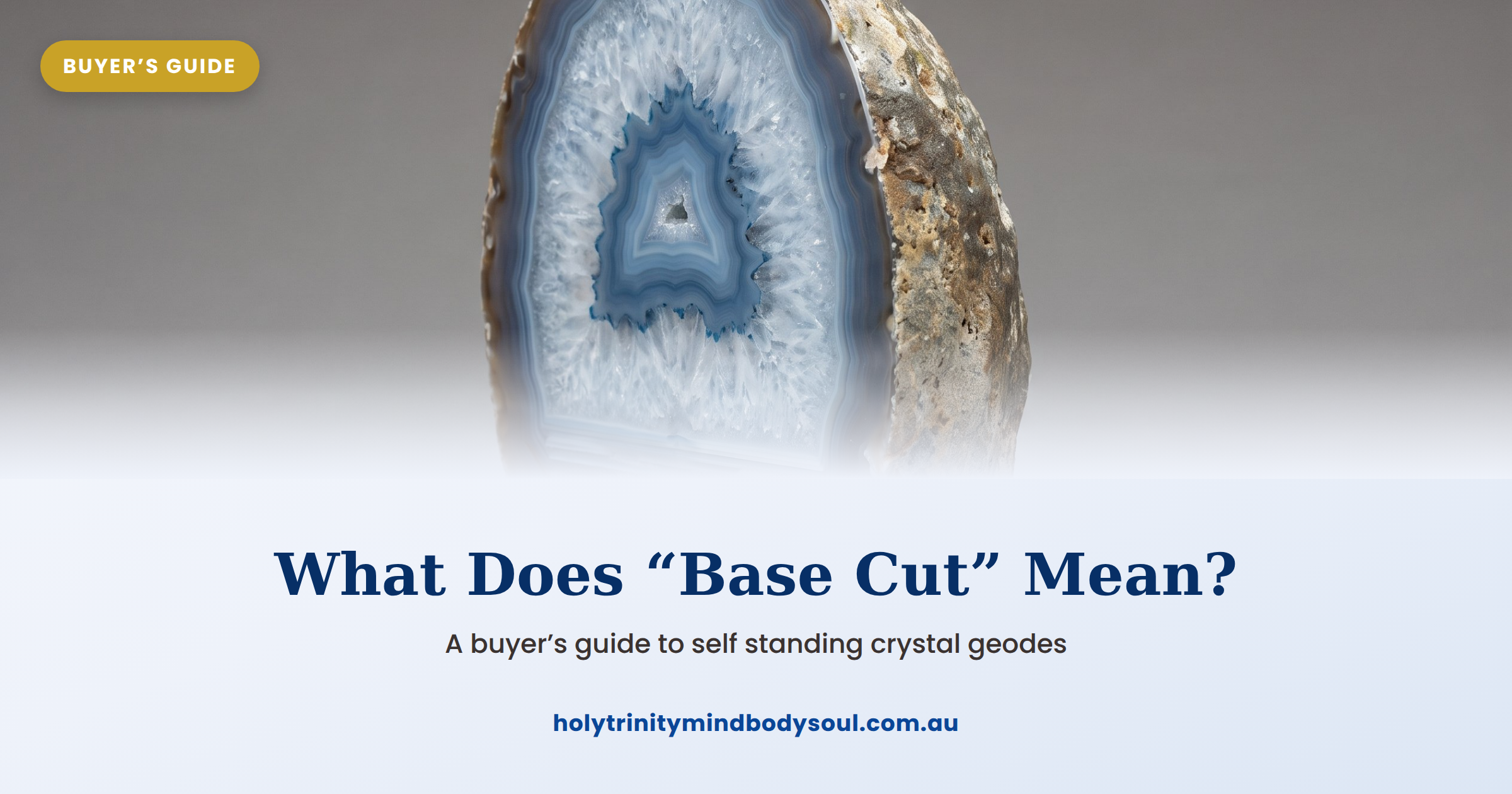
Every agate geode in our range is described as “base cut,” and it is one of the most common terms you will see across crystal geodes generally, yet it is rarely explained anywhere. Here is exactly what it means, why it matters for how you actually use a geode, and how it compares to the other common ways a geode is cut.
How a Base Cut Is Made
A geode starts out as a rounded, roughly egg shaped rock, hollow on the inside and lined with crystal. In its natural state, that rounded shape does not sit flat on its own, it wants to roll. To make a geode into a genuine display piece rather than a specimen that only lies on its side, a slice is taken off the bottom, parallel to the ground, creating one flat, stable surface. That single flat cut across the base is what “base cut” refers to, and it is usually done alongside the main cut that opens the geode in half to reveal its crystal lined interior in the first place.
Why a Base Cut Lets a Geode Stand Without a Stand
The practical benefit is straightforward. Because the bottom is sliced flat and level, a base cut geode balances upright entirely on its own weight, with no metal stand, no ring mount and no extra purchase needed. That makes it genuinely low effort to display: unwrap it, set it down on a shelf, desk or windowsill, and it stands there permanently, at the angle it was cut to show off its interior. It also means the flat base doubles as a stable, heavy little foot, which is exactly why a base cut geode works just as well as a paperweight as it does a decorative piece.
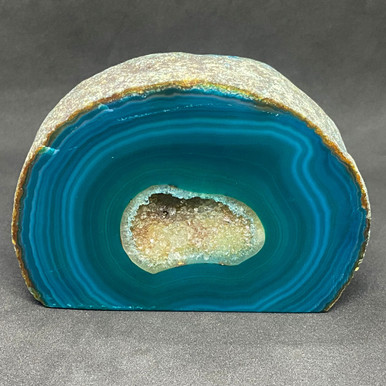
Shop Our Base Cut Agate Geodes
Every piece stands upright on its own, ready to display straight out of the box.
Shop Agate GeodesOther Common Geode Cuts and Formats, for Comparison
Base cut is only one way a geode is finished. A few other formats turn up often enough that it helps to know how they differ:
- Base cut. A single flat slice across the bottom of one half, so it stands upright on its own. The format covered in this guide, and the one used across our own agate geode range.
- Paired halves. The same geode cut straight through the middle and kept as two matching pieces, usually displayed side by side or sold as a set. Neither half is necessarily flattened underneath, so a stand or a flat resting surface is sometimes still needed.
- Cathedral. A large, tall geode section left mostly in its natural outer shape, so it stands the way a cave or spire would, on a wider natural footprint rather than a deliberately flattened base. Common with larger amethyst pieces.
- Cave. A full, rounded geode with an opening cut or broken into one side to reveal the crystal lined cavity inside, while the rest of the outer shell stays intact. Sits more like a display bowl or shallow cave than an upright slice.
Base cut tends to be the most practical of the four for everyday display, simply because the flat bottom does the work a stand would otherwise need to do.
Styling a Base Cut Geode: Desk, Shelf or Console
Because it needs no stand and takes up very little footprint, a base cut geode is genuinely easy to place almost anywhere:
- On a desk. Set beside a keyboard or monitor as a quiet, natural focal point, and let it do double duty as a paperweight for loose notes.
- On a shelf. Group two or three different sizes or colours together for a small collected display, or use one as a simple, striking bookend on its own.
- On a console or entry table. A single, larger base cut piece makes an easy talking point near a doorway, with no extra stand or hardware to arrange.
Frequently Asked Questions
Does a base cut geode need a stand? No. That is the entire point of the cut. The flat base is what lets it stand upright on its own, on any flat surface.
Is a base cut geode heavier than other formats? Weight comes down to the size of the individual piece more than the cut itself, though the flat base does give it a lower, more stable centre of gravity, which is part of why it feels so solid to place down.
Can a base cut geode be used as a paperweight? Yes. Its flat, stable base and natural weight make it just as functional as a paperweight as it is a decorative piece.
Is base cut only used for agate geodes? No, though it is especially common with agate, since agate geodes tend to be smaller and more suited to an everyday, self standing desk or shelf piece. Larger formats like amethyst caves are more often left closer to their natural shape.
Will the flat base show, or is it hidden when displayed? The base simply sits flush against your shelf or desk, so it is not visible once the piece is in place, only its crystal lined face and natural outer edge are on show.
Ready to see one for yourself? Browse our base cut agate geode range, every piece ready to stand and display straight out of the box.
