
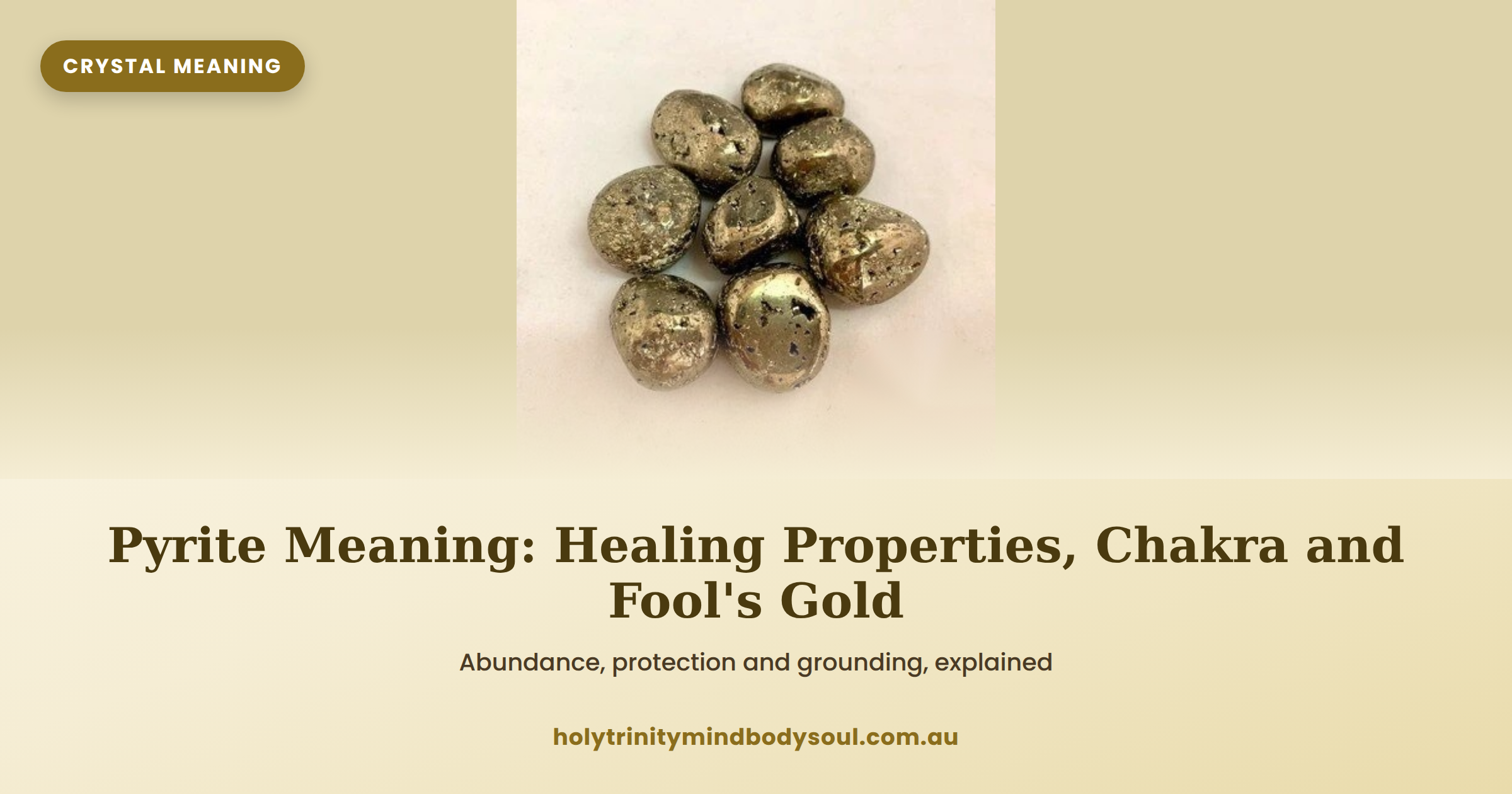
Pyrite has one of the most recognisable stories of any crystal, and most of it comes down to a single, glittering coincidence. Its warm, metallic shimmer looks so much like gold that it has fooled prospectors, treasure hunters and the occasional hopeful backyard digger for centuries. That nickname, Fool's Gold, still follows it everywhere, but there is a lot more to this stone than a case of mistaken identity.
This guide covers what pyrite actually is and why it resembles gold so closely, a simple way to tell the two apart, its traditional meaning and healing properties, its connection to the solar plexus chakra, the one care rule that sets it apart from most other crystals, and a couple of simple everyday rituals to work it into your day.
As with all our crystal guides, the properties below are traditional and spiritual associations rooted in crystal healing history, not scientifically proven or medical claims. We share them as they have been passed down and practiced for generations.
What Is Pyrite, and Why Is It Called Fool's Gold?
Pyrite is an iron sulphide mineral, formed underground under heat and pressure into naturally sharp, geometric shapes, most famously the small, glinting cubes it is known for. Its brassy, metallic gold colour is what earned it the nickname Fool's Gold, most famously during the gold rush era, when prospectors panning a creek bed would occasionally scoop up a handful of pyrite and, for a hopeful moment, believe they had struck it rich.
It is a completely genuine, naturally occurring mineral in its own right, not a fake or an imitation of anything. The nickname is really a comment on how convincing its colour is, not a knock on the stone itself.
Is Pyrite Real Gold? How to Tell the Difference
At a glance, pyrite and gold can look remarkably alike, but a few simple checks make the difference obvious.
- Hardness. Pyrite is considerably harder than gold. Real gold is soft enough to dent or scratch under light pressure from something as simple as a fingernail or a pin, while pyrite will not.
- Weight. Gold is a notably dense, heavy metal. A piece of pyrite the same size as a gold nugget will feel noticeably lighter in the hand.
- Shape. Pyrite commonly forms sharp, natural cube shapes with flat, angular faces. Raw gold never forms this way, it occurs as soft, irregular nuggets or flakes.
- Colour under scrutiny. Pyrite often has a slightly paler, more brassy tone than gold's deeper, richer yellow, and can show faint streaks of green or grey where it has started to tarnish.
Pyrite and the Solar Plexus Chakra
In chakra traditions, pyrite is most closely associated with the solar plexus chakra, or Manipura, located just above the navel. This is the energy centre traditionally linked to personal power, confidence, willpower and self esteem, the seat of the inner drive that turns an idea into action.
The colour connection is a big part of why the two are so often paired. The solar plexus chakra is traditionally represented by golden yellow, the same warm, metallic tone found throughout pyrite. Working with pyrite, whether held during meditation or simply kept close by, is traditionally believed to help energise and clear this chakra, restoring confidence and a steadier sense of drive when either feels low.
Pyrite Meaning and Healing Properties
- Abundance and prosperity. Pyrite's resemblance to gold has made it one of the most reached for crystals for attracting wealth and opportunity, traditionally kept on a desk, near a till, or in the wealth corner of a room in Feng Shui.
- Protection. Pyrite is traditionally regarded as a protective stone, believed to shield its carrier from negative energy and outside influences.
- Confidence. Through its solar plexus chakra connection, pyrite is traditionally used to support self belief and the willpower to see plans through.
- Grounding. Alongside its more energising properties, pyrite is also valued as a grounding stone, traditionally believed to support clear, level headed thinking under pressure.

Shop Our Pyrite Range
Genuine natural pyrite, from tumbled stones and clusters to free form pieces and more.
Shop PyriteCaring for Your Pyrite: Why It's Different From Most Crystals
Most crystals in our range are quartz based and happy with an occasional rinse. Pyrite is the exception. As an iron sulphide, it can tarnish or oxidise with prolonged exposure to water or humidity, so it is best kept dry at all times, including during cleansing.
Skip the water and reach for a dry cleansing method instead, smoke cleansing, sound, or resting it near a piece of selenite overnight are all popular choices. Day to day, a soft, dry cloth is all it needs to stay dust free, and it is worth avoiding damp spots like a bathroom shelf for long term storage.
How to Use Pyrite: Two Simple Everyday Rituals
A Desk Companion for Focus and Follow Through
Keep a piece of pyrite on your desk or workspace, somewhere it naturally catches your eye. When you sit down to start a task that calls for confidence or follow through, a big email, a pitch, a difficult decision, pause for a breath, glance at it, and set a short, specific intention before you begin.
A Simple Abundance Ritual
Hold a small piece of pyrite in your hand for a few slow breaths, picture a specific goal you are working towards, whether that is a financial target, a new opportunity or simply steadier confidence, and set that intention out loud or in your mind. Slip it into a pocket, purse or wallet afterwards to carry that intention with you through the day.
Frequently Asked Questions
What does pyrite mean spiritually? Pyrite is traditionally associated with abundance, protection, confidence and grounding, and is most closely linked to the solar plexus chakra, the traditional seat of personal power and willpower.
Why is pyrite called Fool's Gold? Its brassy, metallic colour closely resembles gold, and prospectors during the gold rush era would sometimes mistake it for the real thing. Pyrite is harder, lighter and commonly forms natural cube shapes, none of which real gold does.
Is pyrite real gold? No. Pyrite is an iron sulphide mineral in its own right, not a form of gold and not a fake. It simply shares a similar colour, which is where the Fool's Gold nickname comes from.
Can pyrite get wet? It is best avoided. Pyrite can tarnish or oxidise with prolonged exposure to water or humidity, so dry cleansing methods and a dry storage spot are recommended over a rinse.
Is pyrite a good crystal for money and abundance? Yes, it is one of the most popular stones used for this purpose. Our guide to crystals for money, wealth and prosperity covers pyrite alongside four other traditional money stones.
Do you ship pyrite Australia wide? Yes, we ship our full pyrite range Australia wide from our online store.
Ready to bring one home? Browse our full pyrite range, from tumbled stones and clusters to free form pieces and more.
