
Standing in front of a supplement shelf trying to choose between hemp seed oil, flaxseed oil and fish oil is a common kind of overwhelm. All three promise omega fatty acids. All three claim to support your heart, skin and general wellbeing. And all three look, at a glance, more or less the same.
They're not the same, though. Each oil comes from a different source, carries a different balance of fatty acids, and suits a different kind of lifestyle. This guide walks through what actually separates them, what the research says, and how to work out which one belongs in your daily routine.
What Is Hemp Seed Oil?
Hemp seed oil is cold pressed from the seeds of the hemp plant, a low THC variety of Cannabis sativa that's legally grown and sold as a food in Australia. It contains no meaningful THC and won't produce any psychoactive effect. What it does contain is a naturally balanced ratio of omega 3 and omega 6 fatty acids, along with gamma linolenic acid (GLA), a fatty acid that's harder to come by in most other plant oils.
If you'd like the fuller picture on how hemp seed oil differs from hemp oil more broadly (a source of confusion in its own right), our guide to hemp seed oil vs. hemp oil walks through the terminology in detail.
What Is Flaxseed Oil?
Flaxseed oil, also called linseed oil, is pressed from the seeds of the flax plant. It's one of the richest plant sources of ALA (alpha linolenic acid), a type of omega 3. Where hemp seed oil offers a broad, balanced spread of fatty acids, flaxseed oil is more concentrated in this single omega 3 type, with very little omega 6 by comparison.
What Is Fish Oil?
Fish oil is the outlier of the three, since it's the only one that isn't plant based. It's typically derived from oily fish such as salmon, sardines or anchovies, and it's valued for containing EPA and DHA, the two omega 3 fatty acids your body can use directly, without needing to convert them from ALA first. This is the main reason fish oil has such a long standing reputation in heart and brain health circles.
Omega Comparison at a Glance
| Hemp Seed Oil | Flaxseed Oil | Fish Oil | |
|---|---|---|---|
| Source | Hemp seeds (plant) | Flax seeds (plant) | Oily fish (animal) |
| Omega 3 type | ALA, plus some SDA | ALA (high concentration) | EPA and DHA (direct) |
| Omega 6 | Yes, including GLA | Minimal | None |
| Vegan friendly | Yes | Yes | No |
| Typical use | Daily oil or capsule, skin, general wellness | Daily oil, baking, smoothies | Capsule or liquid, heart and brain focus |
| Flavour | Mild, nutty | Mild, slightly earthy | Fishy, some odour |
The key distinction to hold onto: hemp seed oil gives you a naturally balanced spread of omega 3 and omega 6 (often cited around a 3:1 ratio) plus GLA, flaxseed oil is your most concentrated plant source of ALA, and fish oil is the only one delivering ready to use EPA and DHA without your body having to do the conversion work.
What the Research Says
A frequently cited comparison study looked at fish oil, flaxseed oil and hemp seed oil supplementation side by side and their effects on cardiovascular health markers in healthy adults. The research found each oil influenced blood lipid profiles somewhat differently, reflecting their different fatty acid makeups rather than one oil being a simple, universal winner.
That's a useful takeaway in itself. The "best" omega oil isn't a fixed answer. It depends on what your body already gets from your diet, whether you eat fish, and what you're hoping the oil will support.
As always, if you have a specific health condition or take medication, it's worth having this conversation with your GP or a qualified health practitioner before adding any new oil or supplement to your routine.
Which Oil Is Right for You?
Choose hemp seed oil if:
- You want a plant based oil with a broad, naturally balanced spread of omega 3 and 6
- You're also interested in skin and general wellness support, not just heart health. Our guide to hemp seed oil for skin covers this in depth
- You'd like an oil that works both in food and as part of a daily wellness ritual
- You're after a formulation aimed at a specific goal, such as winding down at night or supporting relaxation, alongside the general omega benefits
Choose flaxseed oil if:
- Your main goal is maximising plant based ALA specifically
- You're comfortable that your body will need to convert some of that ALA into the more usable EPA and DHA forms
Choose fish oil if:
- You want EPA and DHA directly, without relying on conversion
- You're not following a vegan or vegetarian diet
- Heart and brain health are your primary focus
Many people don't have to pick just one. Some choose to rotate, or pair a plant based oil like hemp seed oil with a fish oil capsule to cover both the ALA and the direct EPA and DHA angle. It comes down to your diet, your values and what you're aiming to support.
Shop Our Hemp Seed Oil Range


How to Add Hemp Seed Oil to Your Day
If hemp seed oil sounds like the right fit, there are two easy ways to bring it into your routine.
Our Aussie Legend Premium Hemp Seed Oil is cold pressed, THC free and vegan, and works beautifully drizzled over salads, stirred through a smoothie, or added to a dressing once the pan has cooled. Like most nutritional oils, it's best kept out of high heat cooking, so add it after cooking rather than into the pan.
Prefer something simpler and more portable? Our Hemp Seed Oil Capsules, 1000mg, 60 pack, are cold pressed and softgel encapsulated, so you can take your daily omega dose with breakfast, no measuring or taste involved.
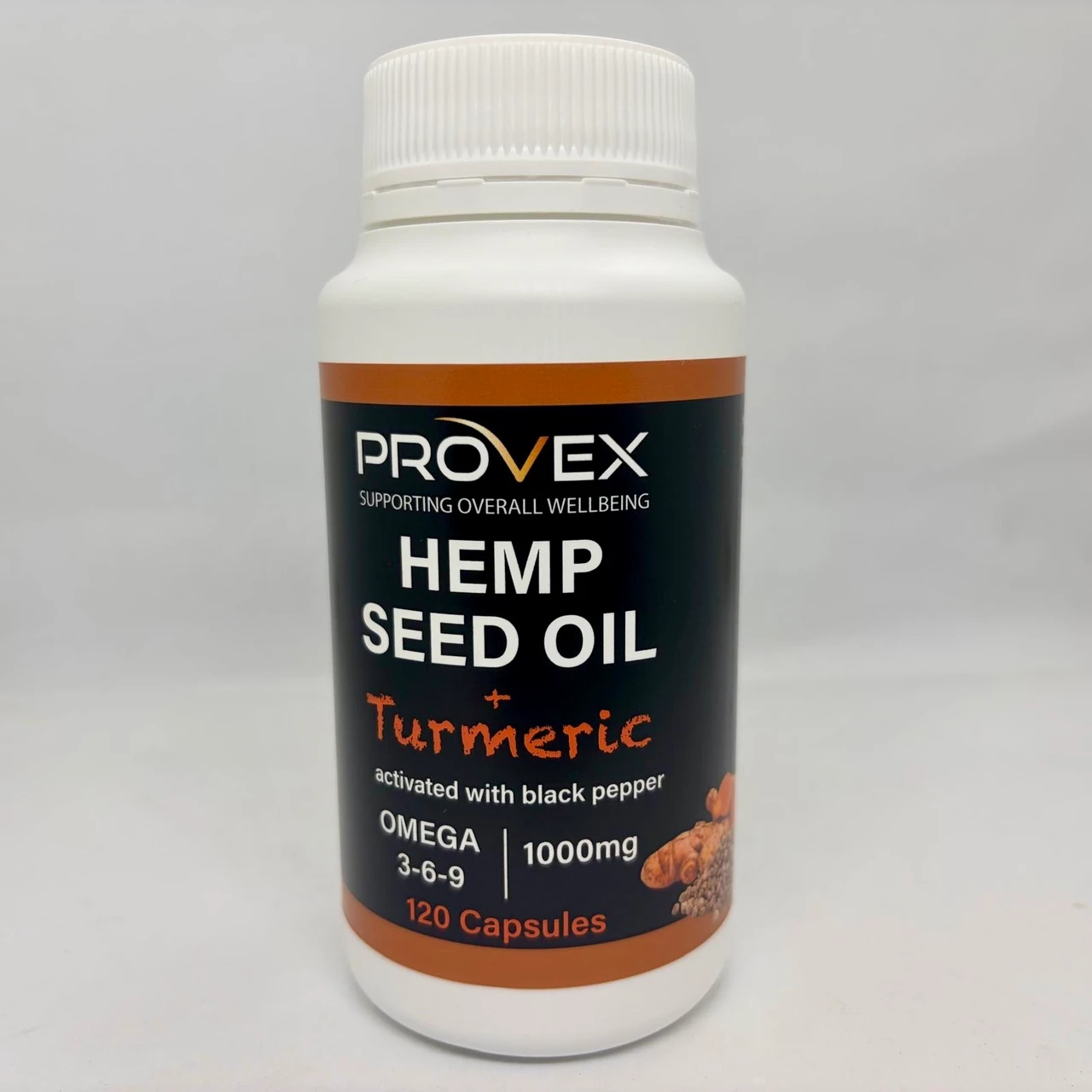
If you're after a hemp seed oil capsule formulated around a specific goal rather than general omega support, our Provex range is worth a look. These are Australian grown, cold pressed and THC free like our other hemp seed oil products, but each one is terpene enhanced for a particular purpose, including Relax, Relief and Sleep formulations, alongside a Hemp Seed Oil + Turmeric blend for those wanting to pair their omega intake with turmeric's own wellness reputation.
You can browse the full range, oil and capsules together, on our Aussie Legends Hemp page, or explore the targeted Provex formulations if you want your hemp seed oil to work toward something specific. For a deeper dive into the broader benefits people report from hemp seed oil, including heart, skin and general wellness support, our complete Aussie Legends hemp seed oil guide is worth a read too.
Frequently Asked Questions
Can I take hemp seed oil and fish oil together? Yes. There's no conflict between the two, and some people choose to take both to cover a broader spread of omega fatty acids. If you're on medication or managing a health condition, check with your GP first.
Does hemp seed oil contain THC? No. Hemp seed oil is pressed from the seed only, which contains negligible to no THC. It won't produce any psychoactive effect and is legally sold as a food in Australia.
Which oil tastes the least noticeable? Hemp seed oil and flaxseed oil both have a mild, nutty flavour that blends easily into food. Fish oil has a more distinct, fishy taste and odour, which is why many people prefer it in capsule form.
Is hemp seed oil suitable for vegans? Yes. Hemp seed oil and flaxseed oil are both entirely plant based, unlike fish oil.
How do I store hemp seed oil? Keep it in a cool, dark place, and refrigerate after opening to help preserve freshness for longer.
Health Disclaimer
This article is intended for general information only and does not constitute medical advice. Hemp seed oil is sold in Australia as a food, not a therapeutic good, and nothing in this article should be taken as a claim to diagnose, treat, cure or prevent any disease or health condition. Everybody's body and health circumstances are different, so please speak with your GP, pharmacist or another qualified health practitioner before starting any new supplement, particularly if you are pregnant, breastfeeding, taking medication or managing an existing health condition.